
1. The Reality Many Children Face
A child can solve equations on paper.
They can explain concepts in class.
But when given tools and materials, something changes.
They pause.
They hesitate.
They don’t know where to start.
This is not because they are not smart.
It is because they have not had the chance to learn by doing.
That is where hands-on learning for kids becomes powerful.
2. The Problem with Classroom-Only Learning
Classrooms are important.
They give structure, knowledge, and discipline.
But they often focus on:
- Memorization
- Exams
- Listening instead of doing
The result?
Children understand ideas…
But struggle to apply them in real life.
They know what something is
But not how it works.
3. Why This Gap Matters
In the real world, results come from action.
Buildings are constructed.
Machines are assembled.
Problems are solved physically.
Without practical experience:
- Confidence stays low
- Skills remain undeveloped
- Creativity is limited
Learning becomes incomplete.
4. Common Mistakes in Learning
Many people assume:
- Theory must come first
- Practical work is advanced
- Children are too young to build
These ideas slow down growth.
The truth is:
Children understand faster when they touch, test, and build.
5. What Hands-On Learning Really Means
Hands-on learning is simple.
It is learning by:
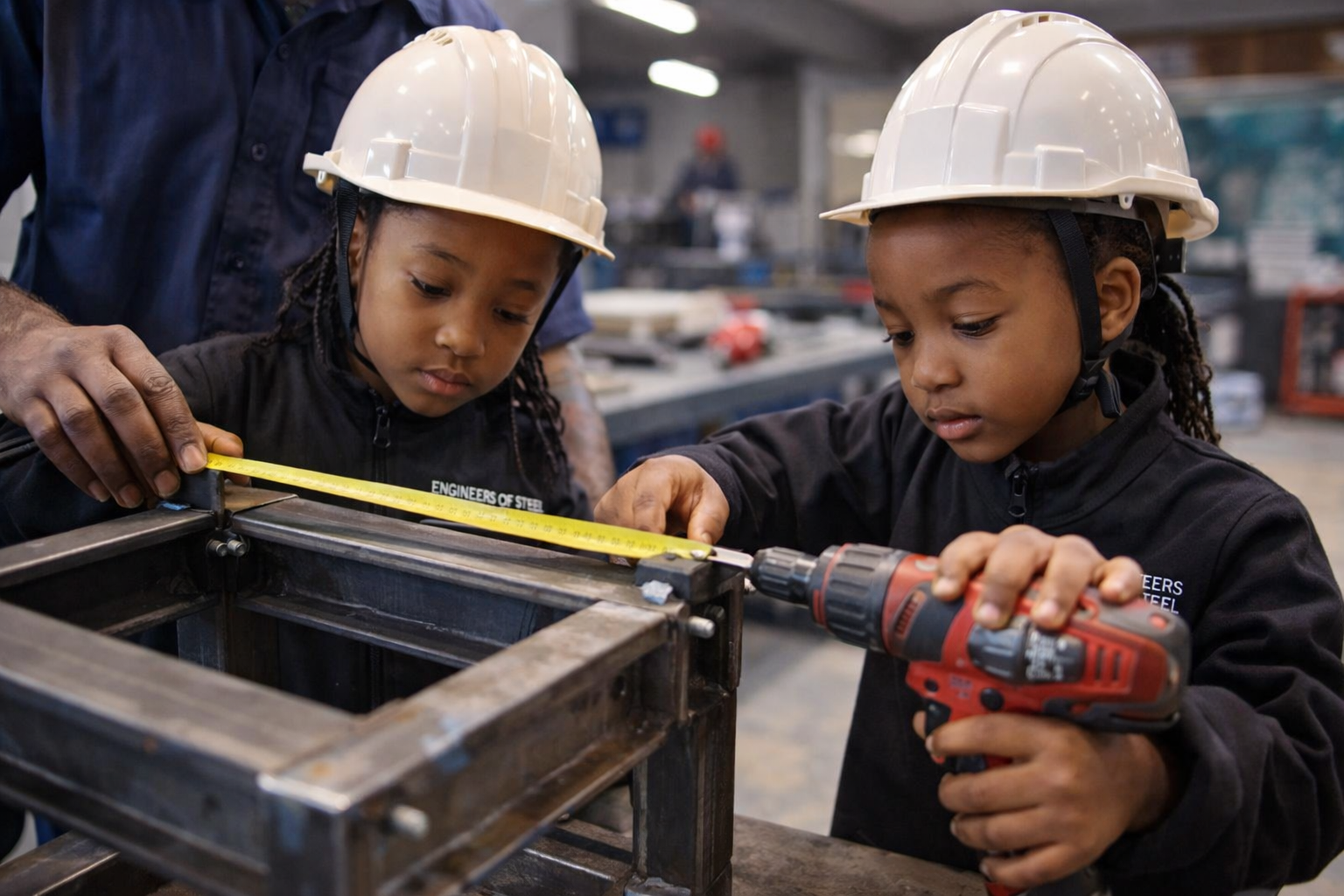
- Building
- Testing
- Measuring
- Fixing mistakes
Instead of just reading about something,
children experience it directly.
They move from:
“I heard it”
to
“I did it”
6. Why Hands-On Learning for Kids Works Better
It Builds Real Understanding
When a child builds something, they see how parts connect.
It Increases Confidence
Completing a real task creates belief.
It Improves Problem-Solving
Mistakes become lessons, not failures.
It Encourages Creativity
Children start thinking:
“How else can I do this?”
It Develops Practical Skills
Skills that can be used in real life—not just exams.
7. A Simple Example
A child reads about structures.
They learn:
- Weight
- Balance
- Strength
But when they try to build something:
- It bends
- It collapses
- It fails
Now the real learning begins.
They adjust.
They improve.
They understand.
8. 7 Things Hands-On Learning Teaches Quickly
- How things work
- How to solve real problems
- How to think independently
- How to handle mistakes
- How to use tools safely
- How to plan before acting
- How to improve step by step
9. What This Means for the Future
Children who learn this way:
- Think differently
- Build confidently
- Solve real problems
They are not limited to theory.
They are prepared for:
- Engineering
- Design
- Construction
- Innovation
And most importantly—real life.
10. A Real Perspective
In a family-based learning environment,
children who are given the chance to build, test, and create:
- Become more curious
- Ask better questions
- Develop deeper understanding
Learning becomes active.
Not passive.
11. Frequently Asked Questions
What is hands-on learning for kids?
It is learning through doing—building, testing, and creating instead of just reading or listening.
Is hands-on learning better than classroom learning?
It complements classroom learning and often makes understanding stronger and more practical.
Can children learn complex skills this way?
Yes. With guidance, children can understand complex ideas faster through practice.
Is it safe?
Yes, when done with proper supervision and safety awareness.
12. Final Thought
Knowledge is important.
But knowledge alone is not enough.
Understanding comes from experience.
When children build, they learn.
When they test, they understand.
When they fail, they grow.
That is the power of hands-on learning for kids.